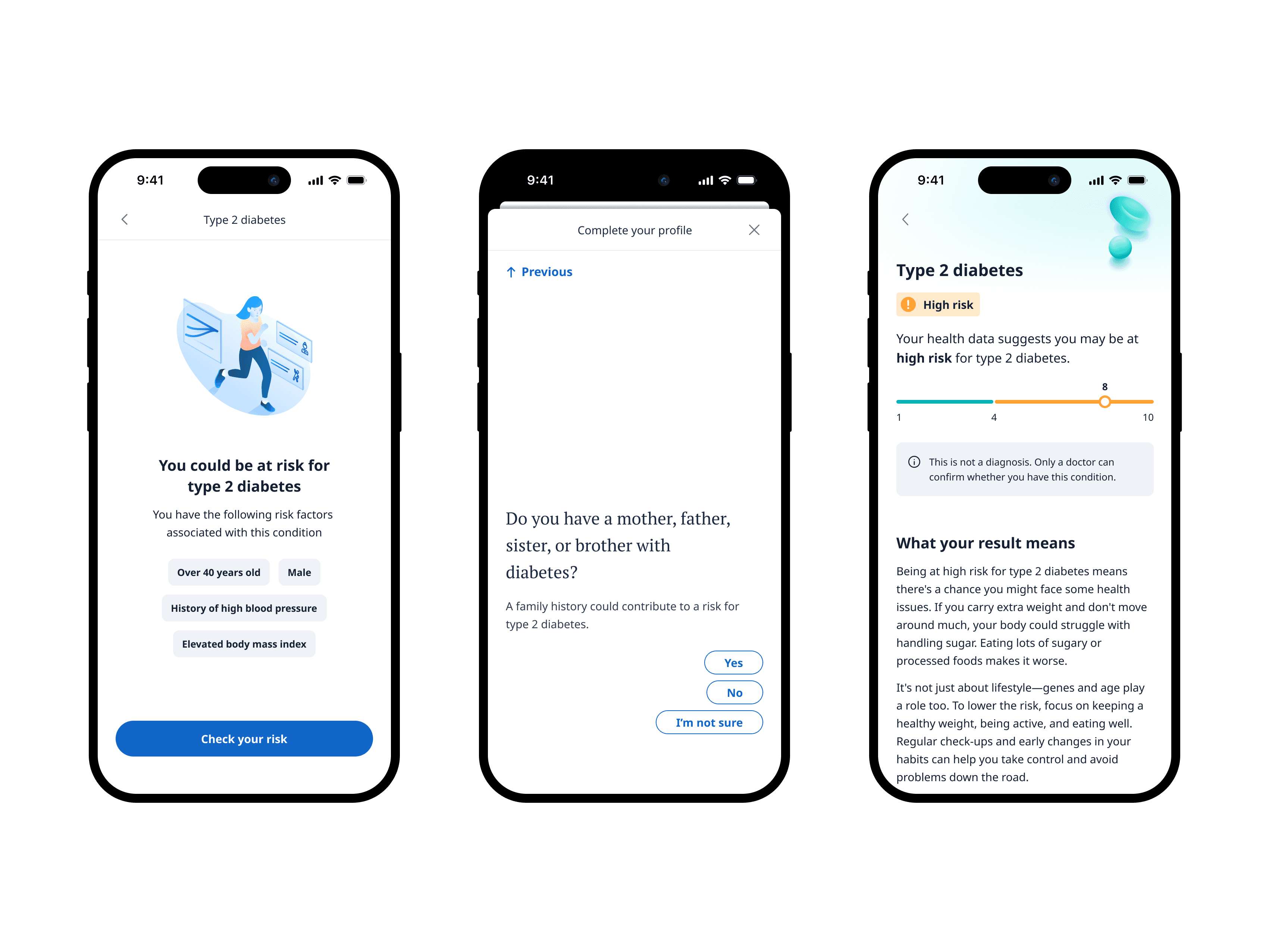
Solution
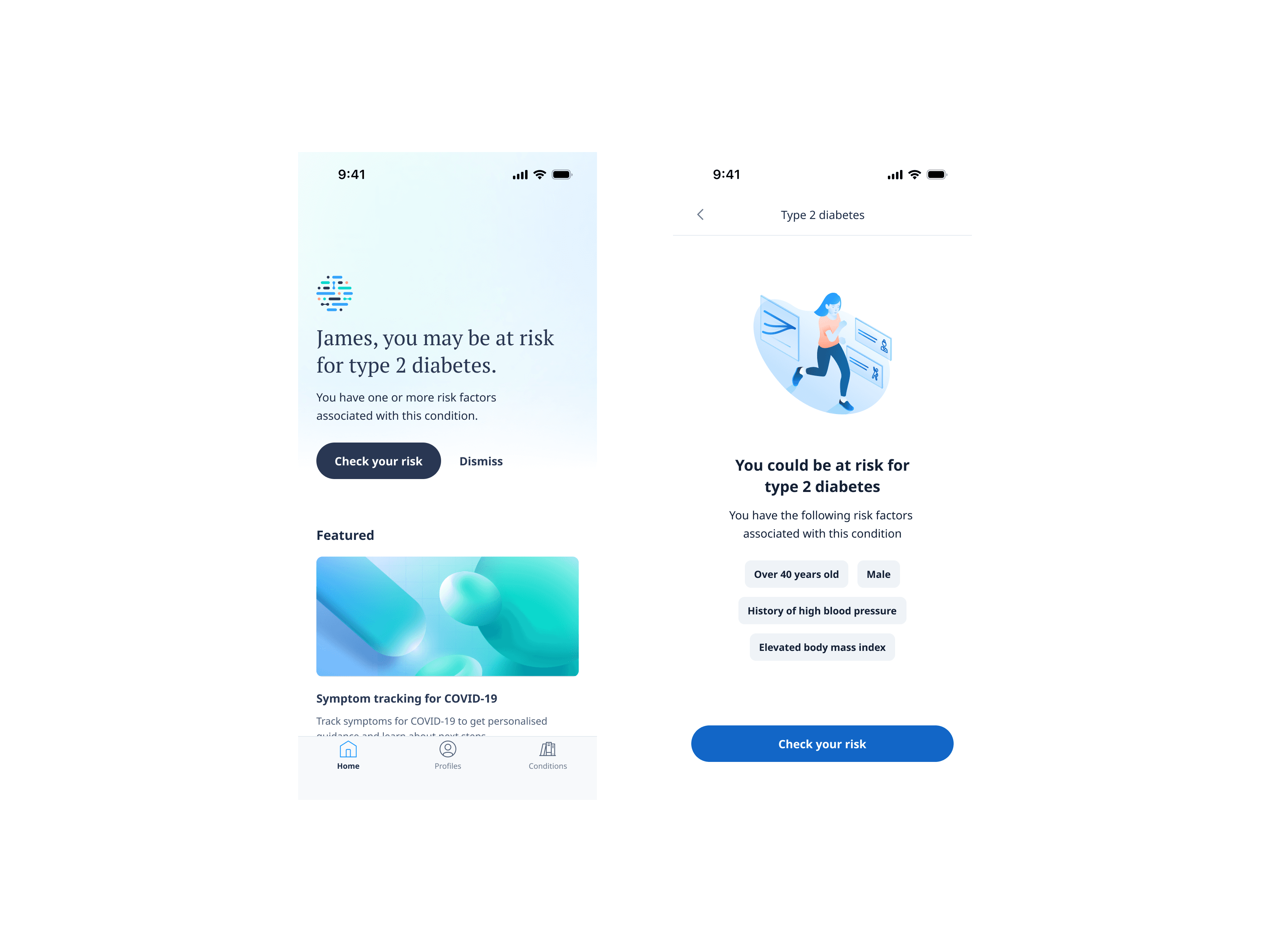
Behind the scenes, we use triggers to passively identify users who may be at risk based on factors like age, BMI, and family history. Once risk is detected, users are presented with tailored messages inside the app that reference known risk factors and encourage them to explore their personal risk, making the insight feel timely, relevant, and actionable.
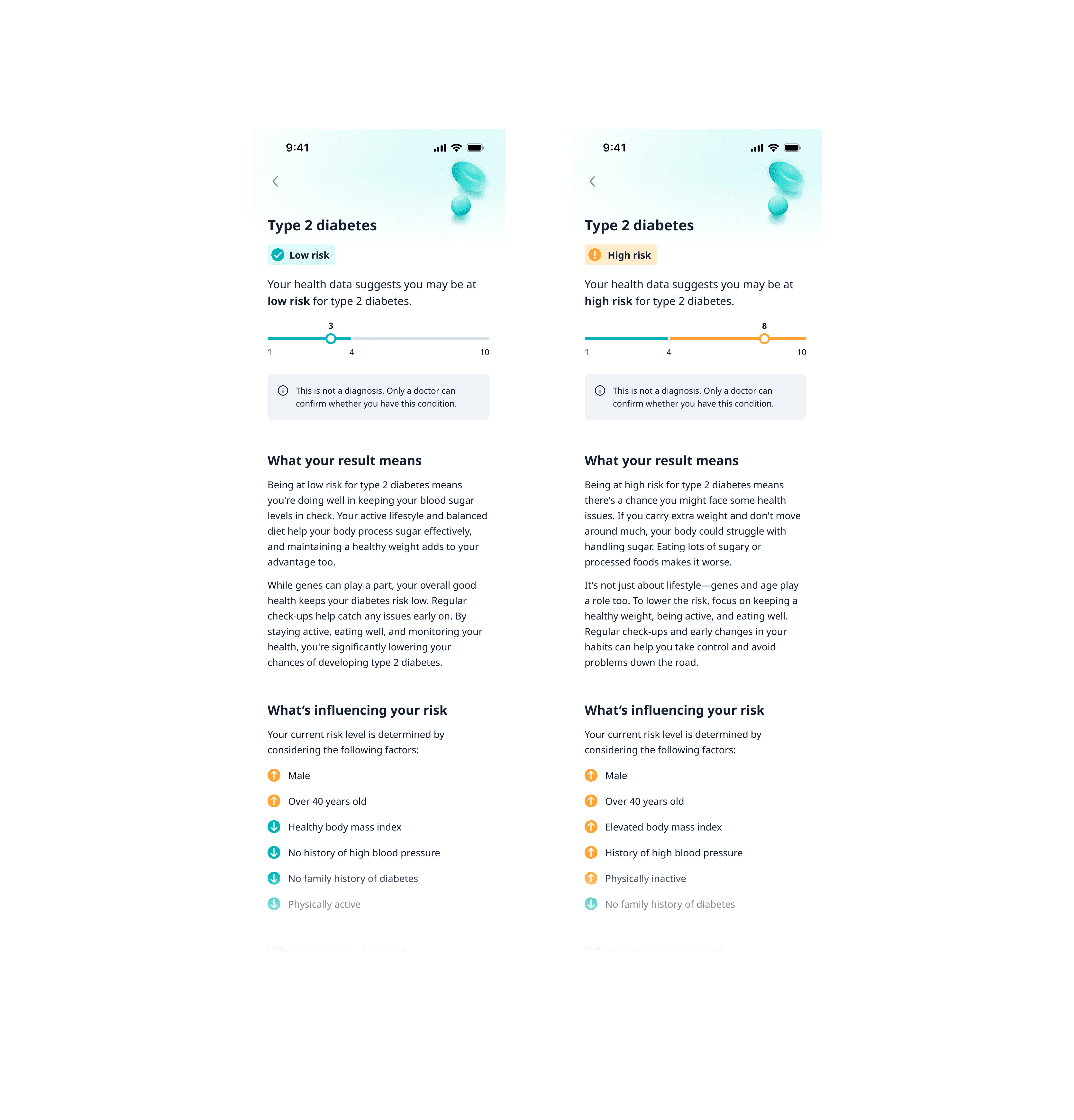
Explaining Results Clearly
Personalized Next Steps
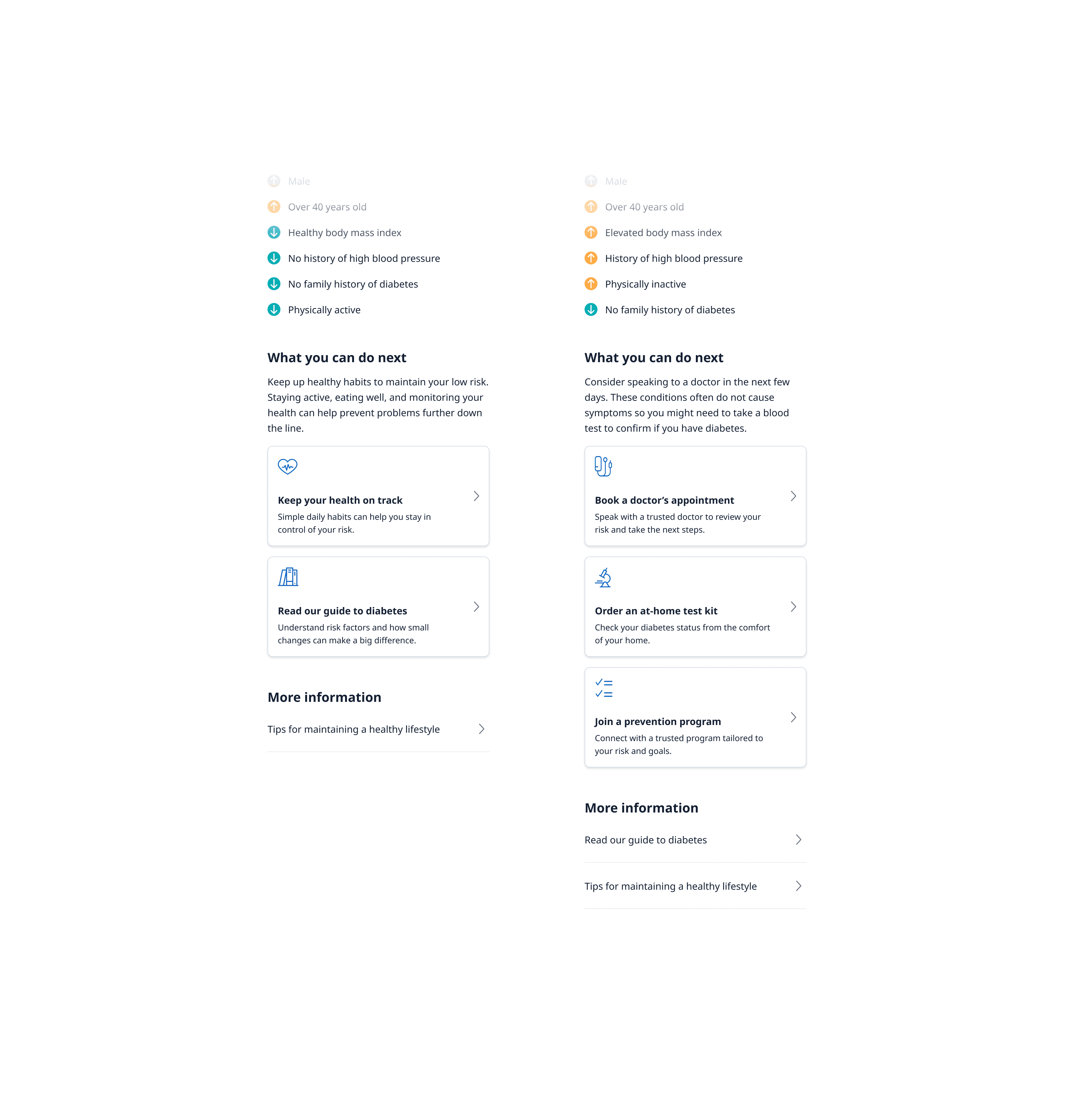
The experience then adapts based on the user’s assessed risk. For low-risk users, the app recommended maintaining healthy habits with practical tips and further reading. For high-risk users, it offered direct pathways to care—such as ordering lab tests or connecting with prevention programs. This ensured every user had a clear, relevant action to take.
Scalable Framework for Prevention
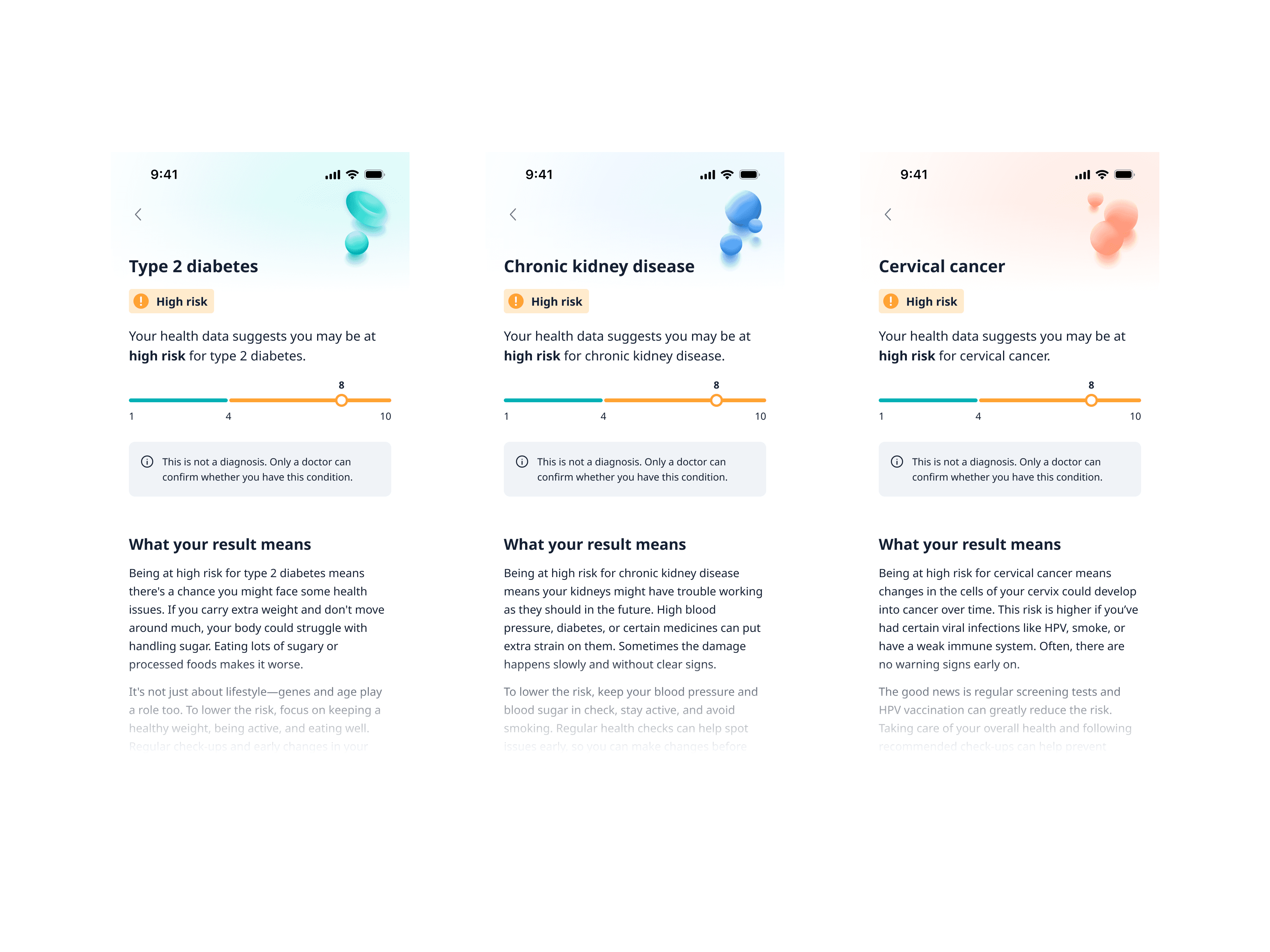
While the flow was designed for type 2 diabetes, the risk assessment framework was built to be scalable. The same approach could be applied to other conditions where early detection matters, such as cervical cancer or chronic kidney disease. This extended the impact of the work beyond a single condition.
Result
Turning Insight Into Action — For Users and the Business
Designing for prevention is inherently complex. You’re not solving an urgent problem, you’re solving before the problem exists. That’s why success in this space isn’t just about clicks or completions—it’s about shifting mindsets, building trust, and nudging people toward action at the right time.
We didn’t expect overnight transformation. But by focusing on clarity, relevance, and respect for the user’s health journey, we were able to create a feature that quietly made a big impact—both for the people using it, and for Ada’s strategic direction.
High Engagement, Even Without Promotion
The diabetes risk assessment launched in the US without any marketing campaigns. Within 3 months, it reached 7% of all users and became the 5th most-used feature in the app. Of those who entered the flow, 85% converted and 68% completed it, showing strong interest and engagement.
A Tool That Drives Awareness and Motivation
71% of users who completed the assessment were identified as high risk, confirming the accuracy of our risk triggers. Many users reported increased motivation to improve their health, often expressing a new awareness of their risk and a desire to change their behavior.
Now a Core Feature in Ada’s Preventive Strategy
This project helped define a new direction for Ada: identifying at-risk users and activating them toward care. The diabetes experience now serves as a blueprint for other areas, including COVID-19 antiviral treatments and cancer screening initiatives in partnership with large health systems.
Designed for Scale and Sustainability
By integrating with existing care providers instead of building our own programs, the solution is scalable across conditions and regions—creating value for both users and enterprise partners.
Next: Supporting Users Beyond the Risk Score
We’re now exploring how to better support users after the assessment, with personalized guidance that adapts to their readiness, motivation, and health goals—whether they’re high or low risk.
Design Decisions
Balancing Trust, Personalization, and Usability
Designing for health means every interaction carries weight. Users aren’t just scanning a menu or booking a ride—they’re engaging with something personal, often vulnerable. With that in mind, we made a series of intentional design decisions to balance clarity, sensitivity, and motivation throughout the experience.
Personalization Without Overstepping
One of the key challenges was how to deliver personalized risk messages without making users feel exposed. We deliberately kept the home screen language broad and non-intrusive, while onboarding nudges were more specific and referenced known risk factors. This balance ensured that messages felt relevant and trustworthy without crossing into overly personal or invasive territory.
Designing for Simplicity and Clarity
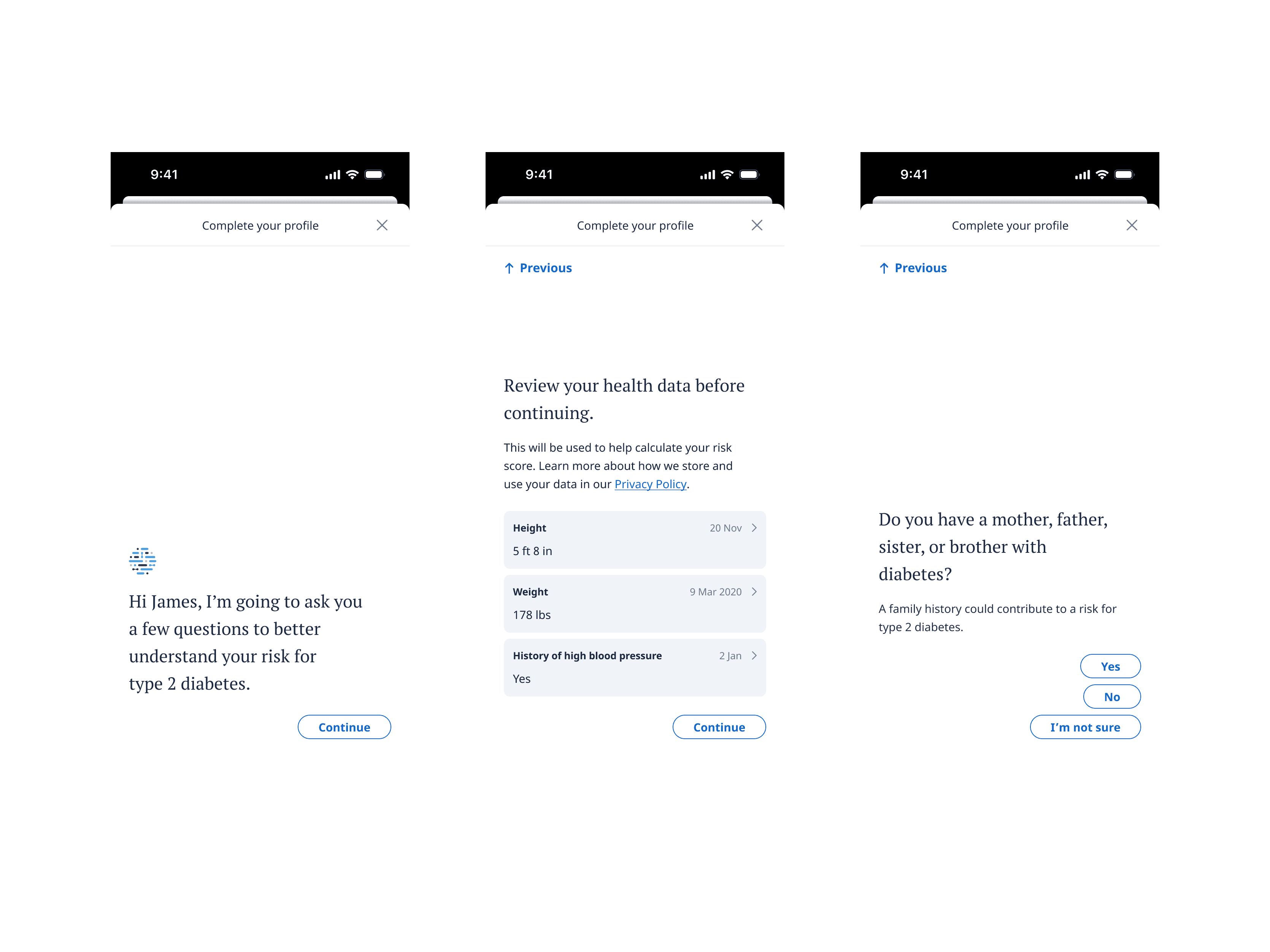
The risk assessment was intentionally kept short and transparent, with pre-filled answers based on known user data. To maintain trust, we added a review step so users could confirm or update information before proceeding. This approach reduced friction, minimized the effort required, and reassured users that they were in control of their own health information.
Communicating Risk Without Alarm
When presenting results, we carefully designed the screen to inform without causing unnecessary worry. We worked with medical experts and UX writers to ensure the language was clear, calm, and actionable. Visual hierarchy guided users’ attention from the risk level to its meaning and then to the recommended next steps, helping them understand their situation without feeling overwhelmed.
Connecting Users to Real-World Care
Instead of attempting to build a prevention program in-house, we chose to partner with trusted providers. This decision positioned Ada not just as an information source but as a facilitator of real care. By guiding users toward programs and resources already available, we created a bridge between digital awareness and offline action, making the solution more credible and impactful.
Closing Thoughts
Designing for prevention is a long game—it’s not about fixing what’s broken, but about creating the conditions for people to stay well. This project challenged me to design with empathy, precision, and strategic clarity. It also reminded me that the most meaningful health interventions often start with something simple: awareness.
By helping people understand their risk earlier, we opened the door to healthier decisions, better outcomes, and a product that can grow beyond a single condition. This wasn’t just about type 2 diabetes—it was about setting the foundation for a preventive health experience that truly puts people first.